The Check Engine Light
(Don’t Shoot the Messenger)

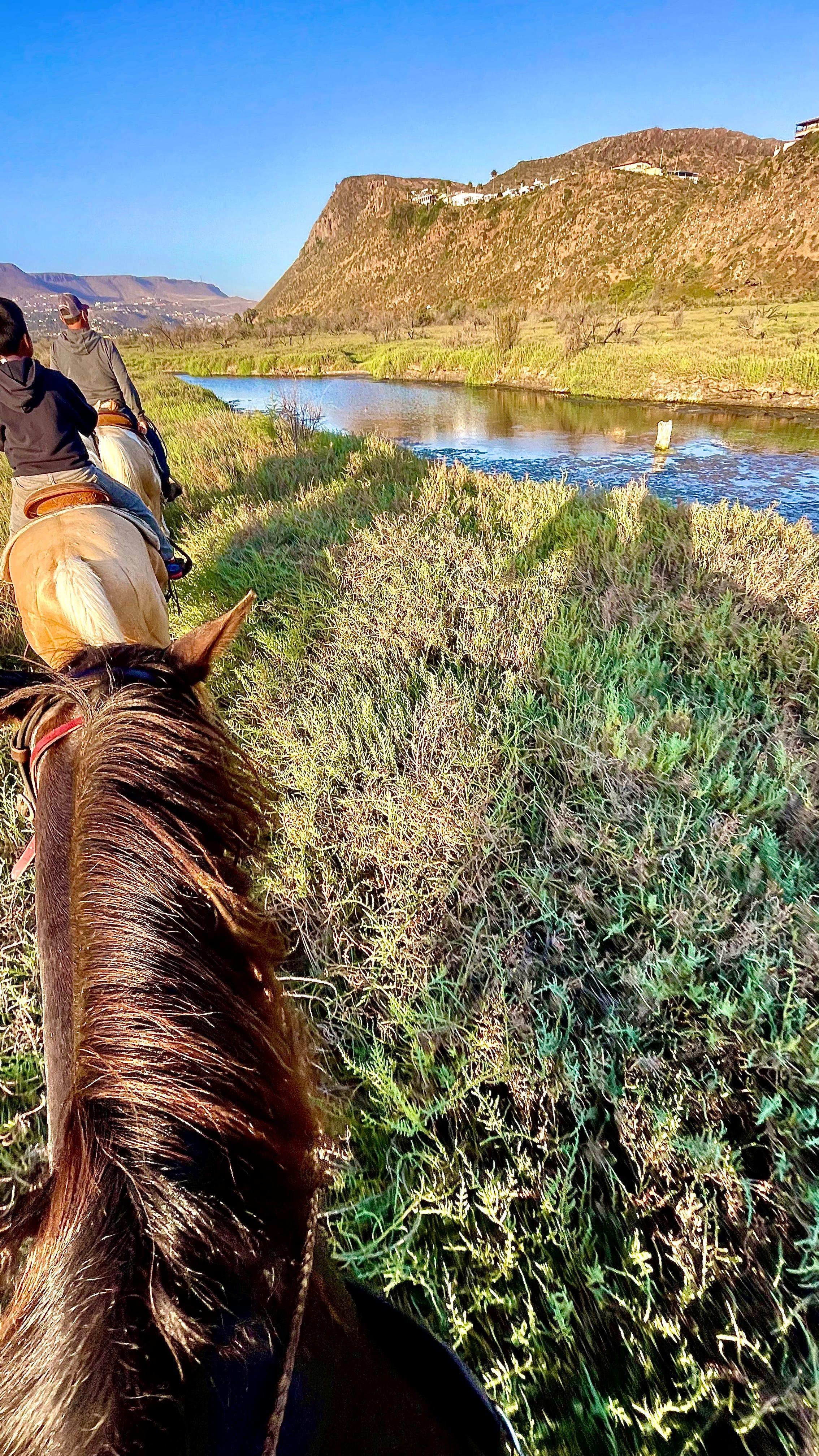
Yesterday, I was annoyed.
I shouldn’t have been—or so I told myself. I was on a late afternoon ride with David on Deseo, and Jose on Cappuccino. It was another training ride for David (9) and Deseo (2), who have begun to find their stride together. I was riding Luna, Deseo’s mom. The sun was out, the temperature was perfect. It should have been amazing.
Except that it wasn’t.
I was irritable. The pace of the ride was awful—a maddening, awkward speed where Luna wanted to walk a few steps, then trot to catch up. Walk a few steps, trot to catch up. Somehow, neither Jose nor David seemed to mind, but it was driving me crazy.
The thing is, Luna has a beautiful, strong, forward walk. She is not a dawdler. When we go out riding on our own, she reaches and stretches, each long stride moving the ground beneath her as though the earth itself were her treadmill. I love her stride. She covers ground.
But yesterday, she was frustrated, too. She didn’t want to be left in the dust—so every few steps she tried to lurch forward to keep pace with the trot/walk/trot happening in front of us. So there we were—each bounce of the trot jolting my nerves along with my body, each subsequent pull on the reins to hold her back jolting hers.
Finally, we reached the beach. Luna and I took off galloping - in our own world and at our own pace - and reclaimed a bit of our stride.
Still, the irritation lingered.
Sitting with my tea this morning, reflecting on the ride, I found myself spiraling into judgment: What is wrong with me? Why couldn’t I simply enjoy the afternoon? Why was I being so touchy over nothing? How could I possibly be annoyed by a ride?
And then I remembered the analogy of the check engine light.
As the story goes, a teenager is learning to drive when her car’s check engine light suddenly flashes on. When she anxiously tells her parents, they calmly take a piece of black tape and paper, stick it over the dashboard bulb so she doesn’t have to see it anymore, and declare, “Solved!”
We laugh because it’s absurd. Who would ever do that? The underlying issue doesn’t vanish just because you obscure the warning signal.
Yet, this is often exactly what we do with our own ‘negative emotions.’
Why am I angry? Why am I sad? Why am I afraid? Why am I so irritated? Why can’t I get over it?
Instead of recognizing the gift of those messy emotions, we rush to rid ourselves of them. We berate ourselves for having “negative” feelings, force a smile, and slap a piece of mental tape over the dashboard. We shove them down and assume our engine is firing on all cylinders.
What if, instead, we viewed our “negative emotions” not as something to be squelched, but as a messenger with valuable information? A warning system?
An emotional check engine light isn’t a failure. It doesn’t mean you are wrong, or that the people around you are wrong. It just means something in the system requires your attention. Something needs to be heard and is being ignored.
Instead of asking, “Why am I so irritable?” we can ask, “What in me is not feeling heard? What is feeling silenced? What needs to be expressed?”
Take my ride yesterday. The more helpful question wasn’t “Why couldn’t I just be happy in a place I love with people I love?” The real question was, “What was that irritation trying to tell me?”
The thing is, that feeling of being passively dragged along at a pace that isn’t mine gets me every single time—whether it is literal or metaphorical. It disrupts my own sense of autonomy, but it also disrupts my connection with my horse.
Each time I tried to tune in to Luna, the ‘paso enfadoso’ pulled us apart. It was like being at the beach standing in the water at the place right where the waves break. A bit further on shore, you can let the water lap at your feet. A bit further out, you can float on the swell. But right where the waves break? You just get tossed around.
David and Jose weren’t wrong. Luna wasn’t wrong. I wasn’t wrong.
But my internal system was flashing a bright red light: Hey, pay attention. This isn’t working for you. If you leave this unchecked, you’re going to blow a gasket.
That irritation wasn’t a failure to be squelched or cured. It was a messenger, reminding me to pay attention.
This is brilliant. A question I’ve finally learned to ask myself after years of trial and mostly error, is ‘What can I learn from this?’